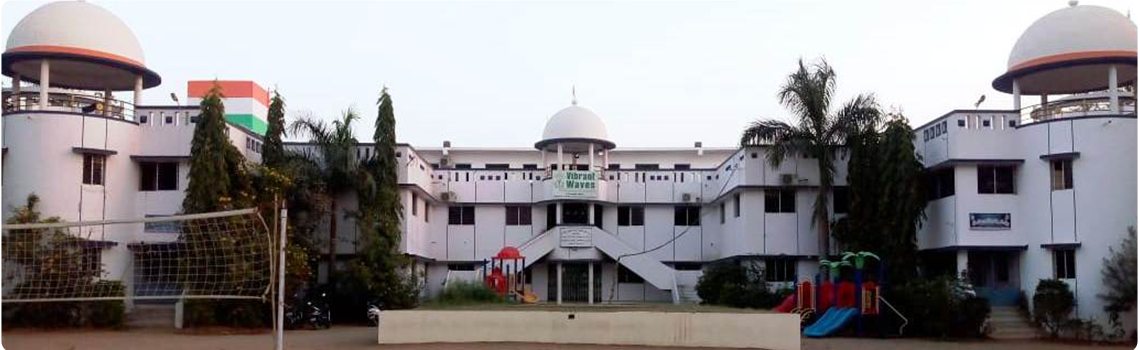
Title : Institutional Development Plan (IDP)
Name of the Institution : Shree Narmada Gram Vidyapith (B.R.S. College)
Address : Lachchras Road, At & Post: Mangrol, Taluka: Nandod (Rajpipla), District: Narmada – 393 150
Duration : 2025-2030
Date of Submission : January 01, 2026
Shree Narmada Gram Vidyapith, Mangrol is a leading institution located in a tribal and remote rural area. The primary objective of this institution is to equip rural youth in the fields of agriculture and rural development, connecting modern science with the rural lifestyle to achieve the holistic development of the community.
Year of Establisment : 2010
Type of Institution : Self-financed Undergraduate Institution.
Accreditation & Affiliations : Veer Narmad South Gujarat University (VNSGU), Surat.
Program Offered : B.R.S. (Bachelor of Rural Studies).
Faculty and Staff Strength : 11
Student Demographics : Majority of students hail from the remote and rural pockets of Narmada district. A significant number of students belong to low-income groups and rely on government scholarships and financial aid for their higher education.
Strengths : Local reach in rural areas and agriculture-oriented practical education.
Weaknesses : Limited availability of digital resources due to the remote location.
Opportunities : New research and training in the fields of organic farming and animal husbandry.
Challenges : Increasing awareness of education in rural areas and modernizing traditional farming practices.
Vision : To empower rural and tribal youth through higher education and prepare them for local leadership and employment.
Mission : To develop the rural community by integrating modern science and technology into the rural lifestyle.
Core Values : Rural empowerment, social transformation, and environmental conservation.
Practical Knowledge : To provide students with direct hands-on experience at the field and ground level, rather than just bookish knowledge.
Introduction to New Technology : To provide guidance on the use of modern machinery, organic farming, and drip irrigation in agriculture.
Rural Leadership : To develop leaders who can understand rural issues and contribute actively to the Panchayati Raj and rural management systems.
Rural Extension : To deliver various government schemes (such as agricultural assistance and tribal welfare schemes) to the last person in rural areas.
Environmental Conservation : To raise awareness about environmental protection and water harvesting in rural areas.
Academic Excellence : Practical and employment-oriented rural education.
Sustainability : Awareness of environmental conservation and water harvesting.
Knowledge of India : Preservation of Indian agricultural traditions and rural culture.
Activity : Organizing field visits to the agricultural sector for students.
Responsibility : Principal and faculty members.
KPIs : Student participation rates and field work reports.
Tracking progress as per the Local Inquiry Committee (LIC) reports and university guidelines.
Risks : Financial sustainability of self-financed models and staff turnover.
Mitigation : Diversifying funding sources and professional development for existing staff.
Financial planning for academic activities and university fees on a self-financed basis.
Veer Narmad South Gujarat University Affiliation Approval Letter